Skip to content

The Artistic and Cultural Debate Surrounding Bullfighting

The debate about whether bullfighting is an art form or a brutal sport is complex and multifaceted. Several paintings from series of paintings “Civilion” portrays a delicate balance between a ballerina and a matador, blending grace and strength. Paintings serves as a visual exploration of this controversy. The ballerina symbolizes the bull, her movements embodying grace and power. Her elegance mirrors the fluidity of the bull’s dance in the ring, turning a scene of potential violence into one of beauty and artistry. For a moment, take a short break. Close your eyes, and imagine you are the ballerina standing in front of a matador, vulnerable, with a deep breath, ready for his next move. Now, change your skin one more time, imagine yourself as the bull, feeling the tension and the nearness of death.Which role feels more natural to you? How does it feel to switch between these perspectives? Is there a sense of art in each, is fear a common feeling?

Hemingway's Perspective

Art in the Face of Death

Ernest Hemingway, who loved the thrill of bullfighting, famously written, “Bullfighting is the only art in which the artist is in danger of death.” This perspective elevates bullfighting to an art form, emphasizing the dramatic and perilous dance between matador and bull. Hemingway’s admiration for bullfighting stemmed from his view of it as a profound expression of human emotion and conflict. He believed that the bullring was a stage where life and death played out in a ritualistic dance, reflecting the raw, unfiltered essence of human experience.

In his writings, Hemingway often described bullfighting with poetic reverence, highlighting the matador’s grace and precision as he faced the bull. The matador’s movements, choreographed to trigger specific actions from the bull, were seen as a form of artistic expression. This notion of bullfighting as an art form is encapsulated in large size painting “Dance Me to the End of Fight,” where the matador and ballerina engage in a deadly ballet, their movements echoing the themes of elegance, danger, and artistry that Hemingway so deeply appreciated.
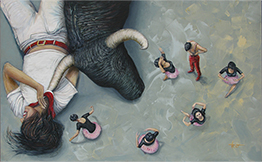
However, the brutality of the real corrida cannot be overlooked. The bull, often weakened by the picadors and banderilleros, faces a matador who aims to deliver the final blow with a sword. This act is not only dangerous for the matador but also a gruesome end for the bull. The blood, the struggle, and the ultimate death are integral parts of the spectacle, making it a deeply polarizing event. Critics argue that this inherent violence and cruelty overshadow any claims of artistry, turning the event into a display of brutality rather than a noble art form.

Carmen Ballet

An Artistic Parallel

Drawing a parallel to the ballet “Carmen,” where toreadors and ballerinas share the stage, this painting invites viewers to see the bullring through a different lens—one of elegance and artistic expression. In “Carmen,” the interplay between the characters mirrors the dance of life and death depicted in this artwork. The delicate movements of the ballerina’s hand create a visual harmony against the intense gaze of the matador, a dance of subtlety and strength.

In the ballet “Carmen,” the story unfolds with themes of passion, jealousy, and tragedy. The characters’ interactions are filled with dramatic tension, much like the dynamics in a bullfight. The toreadors and ballerinas perform with an intensity that captivates the audience, drawing them into a narrative that is both beautiful and heartbreaking. This blend of art and emotion is what makes both “Carmen” and bullfighting compelling forms of artistic expression.

For those who appreciate the beauty of ballet and the intensity of a bullfight, “Dance Me to the End of Fight” offers a unique perspective. It challenges viewers to see beyond the surface, to appreciate the intricate dance between opposing forces, and to reflect on the deeper themes of grace, strength, and resilience.

Contrasting Audiences

Bullfighting and Ballet

The audiences for bullfighting and ballet are starkly different. In a bullfight, the crowd is vocal and emotional, cheering for the matador or calling for the bull’s life to be spared. This raw engagement contrasts with the quiet, contemplative atmosphere of a ballet performance, where the audience’s appreciation is shown through silent observation and applause at the end. Painting “The Art of Danger” highlights contrasting audience dynamics, emphasizing the different ways in which people engage with these performances.

In a bullfight, the audience is part of the spectacle, their reactions fueling the intensity of the performance. The shouts of “Olé!” resonate through the arena, each cheer a recognition of the matador’s skill and the bull’s bravery. This passionate engagement is a stark contrast to the world of ballet, where the audience watches in silence, their emotions conveyed through the stillness of the theater and the applause at the performance’s end. The ballerina’s movements are met with quiet admiration, the audience’s respect for her grace and skill evident in their hushed appreciation.

After the performance, the experiences of the audiences of bullfighting and ballet continue to diverge. Following a ballet, which is typically held in the evening, the audience leaves the theater with a sense of inspiration and serenity. They may gather in nearby cafes, discussing the elegance of the dancers over a glass of wine, their hearts lightened by the beauty they witnessed.

In contrast, the aftermath of a bullfight, often held in the afternoon, is filled with a different kind of energy. The spectators, still buzzing with adrenaline and the visceral excitement of the event, head to local restaurants to enjoy hearty meals, their senses still lingering with the sights, sounds, and smells of the bullring. The blood, the thrill, and the raw display of life and death leave a lasting impression, fueling discussions that are as intense as the event itself.

Bullfighting

A Cultural Tradition

Bullfighting is deeply woven into the fabric of Spanish culture. It is celebrated as a historic tradition, filled with rituals and pageantry that date back centuries. For many, it symbolizes a struggle between life and death, a performance of bravery and skill as it is on painting “Would you Like to Dance Until Death”. Supporters of bullfighting argue that it is an art form, where the matador’s movements are akin to a dancer’s, choreographed to create a spectacle of elegance and precision.

Bullfighting satisfies a primal human instinct for survival and the hunt, an echo of times when hunting was essential for nourishment and survival. The ritual of bullfighting, with its elaborate ceremonies and pageantry, symbolizes the eternal struggle between life and death. Bullfighting, with its life-or-death stakes, as a continuation of ancient traditions, fulfilling primal human instincts of survival and hunting. This tradition resonates with the human psyche, reflects the historical necessity where survival sometimes means that one life had to end for another to continue.

The Brutality of Bullfighting

Art or Brutality? The notion that bullfighting is an art form raises questions about the nature of art itself. Can the beauty of the matador’s movements be separated from the violence inflicted on the bull? Is the risk and danger inherent in bullfighting a necessary component of its artistry? Can art be brutal and violent? These questions challenge our understanding of what constitutes art and whether violence can be an integral part of it.

Critics, however, maintain that the inherent violence and cruelty involved in bullfighting cannot be justified as art – painting “Civilón and Carmelita”. They argue that true art should inspire and uplift, not cause suffering and pain. The brutality inflicted on the bull overshadows any artistic merit, making bullfighting a controversial and divisive practice. This debate continues to spark heated discussions about the ethics and aesthetics of bullfighting.

The debate surrounding bullfighting is contentious. Critics argue that it is a cruel sport that exploits animals for entertainment, while supporters view it as a cultural tradition that exemplifies artistry, bravery, and skill. In regions of Spain, bullfighting has faced bans and subsequent reinstatements, with proponents emphasizing its cultural and artistic value. “Dance Me to the End of Fight” encapsulates this debate, presenting the bullring as a stage for a deadly ballet, where the audience’s reactions range from passionate outcries to silent admiration.

The Brutality of Art

The scars on the ballerina’s back in painting “Dance Me to the End of Fight” are deeply symbolic. They represent the swords thrust into the bull during the second act of a bullfight, which are meant to weaken the bull for the final act. These scars tell a story of struggle and resilience, marking the ballerina as a survivor. So, is it then bullfighting the most brutal form of art? Can art be brutal and violent?

Marina Abramović, a renowned performance artist, often incorporates themes of brutality and endurance in her work. Her performances frequently involved physical pain and self-inflicted injuries, challenging the boundaries of art and the artist’s body. Abramović’s work pushes the limits of endurance, revealing the profound connection between pain, resilience, and artistic expression. In her performances, she has used knives, whips, and even invited the audience to participate in acts of violence against her, leaving her with physical scars. These acts of self-sacrifice and endurance have become integral to her art, demonstrating that brutality can indeed be a powerful element of artistic expression.

Just as Abramović’s scars tell a story of struggle and resilience, so do the scars on the ballerina’s back in “Dance Me to the End of Fight.” These marks are not merely wounds but symbols of the endurance and strength required to face life’s challenges. The juxtaposition of the ballerina’s grace with the brutality of her scars highlights the complex nature of art, where beauty and violence often coexist.

Fine Line between Art and Violence

Painting “Dance Me to the End of Fight” challenges viewers to reconsider their perceptions of bullfighting, highlighting the artistry and cultural significance behind the tradition. By presenting the bullring as a stage for a deadly ballet, this painting underscores the elegance and strength inherent in both the matador and the bull. For anyone who appreciates art, love, and the intricate dance between opposing forces, this piece offers a profound reflection on the beauty and resilience found in struggle.

In summary, the painting “Dance Me to the End of Fight” serves as a powerful commentary on the artistic and cultural debate surrounding bullfighting. It invites viewers to look beyond the surface and appreciate the intricate choreography, the emotional engagement of the audience, and the symbolic scars that tell a story of resilience. Regardless of our personal opinions on whether bullfighting should be banned, the larger question remains: is bullfighting simply a cruel and bloody “sport”, or is it a form of artistic expression that resonates deeply with human experience and tradition? Bullfighting is undeniably woven into the cultural fabric of Spain, and for many, it represents a significant part of the country’s heritage. Is there a way to preserve the artistic and cultural aspects of this tradition without completely cancelling something so deeply ingrained in Spanish identity? To move forward, we need meaningful dialogue that explores sustainable solutions—ones that respect both the cultural significance of bullfighting and modern concerns about ethics and animal welfare.

This issue goes far beyond bullfighting—it reflects a broader challenge facing society today. In a world increasingly divided, we need less polarization and more genuine dialogue. Too often, differing viewpoints are dismissed rather than understood, when in fact, the real progress comes when we engage with one another, seeking common ground rather than deepening the divide.

SHARE

SHARE

FOLLOW

RECENT POSTS

SUBSCRIBE


SHARE

RELATED POSTS

0 Naslovna Blog

Bullfighting Symbolism in Paintings: Civilón and Hemingway
Few subjects in art carry as much raw emotion and cultural weight as bullfighting symbolism in paintings. Ernest Hemingway’s Death in the Afternoon immortalized the Spanish corrida in literature, while the series Civilon captures...
0 Naslovna Blog

Exploring the Artistic Journey of "Casual Cruelty": A Reflection on Art and Social Commentary

Art possesses a unique ability to evoke deep emotions, provoke thought, and spark conversations about society’s most pressing issues. Painting “Casual Cruelty,” from the “Civilón – The Bull Who Ate Flowers” series,...
A powerful image of Civilón, the real-life bull who inspired the beloved children's story character Ferdinand, standing in a bullring. The image depicts the majestic animal facing the crowd, conveying a sense of strength, resilience, and the anti-war message embedded in the "Civilón" painting series.

Civilón – The Bull who Loved to Eat Flowers

“Bullfighting is the only art in which the artist is in danger of death and in which the degree of brilliance in the performance is left to the fighter’s honor.” (E. Hemingway)...

FIND MORE …

Bullfighting Symbolism in Paintings: Civilón and Hemingway

Few subjects in art carry as much raw emotion and cultural weight as bullfighting symbolism in paintings. Ernest Hemingway’s Death in the Afternoon immortalized the Spanish corrida in literature, while the series Civilon captures its visceral drama on canvas. This article explores the artist’s journey initially inspired by the Ferdinand story, culminating in the creation of the “Civilón” series. Every painting offers
Read More

Exploring the Artistic Journey of “Casual Cruelty”: A Reflection on Art and Social Commentary

Art possesses a unique ability to evoke deep emotions, provoke thought, and spark conversations about society’s most pressing issues. Painting “Casual Cruelty,” from the “Civilón – The Bull Who Ate Flowers” series, serves as a powerful example of this artistic potential. This piece reflects on the harsh realities faced by animals and draws inspiration from the impactful works of other
Read More

Gone with a River: Ephemeral Art

“The abandoned art gallery, transformed into my ephemeral art atelier, became a symbol of both creativity and impermanence. Nestled among the trees on Karlovačka Ada, this space changed everything. Island atelier, built on sand, surrounded by trees, and kissed by the river’s breeze, stood as a testament to the creativity and impermanence that defined my journey. But just as the
Read More
Three collaborative paintings displayed on a rustic bamboo wall, showcasing the diversity of shared artistic expression.

The Power of Collaboration: Creating Friendship Through Art

“The magic of art collaboration lies in its ability to unite people – the power of collaboration to create long lasting friendship. In working together, we build connections, creating something far more meaningful than we could alone. This shared creative process fosters mutual inspiration and leads to creative growth” Social Creativity: How Collaboration Fuels Artistic Growth The power of collaboration
Read More
Behind the canvas of Aleksandar Petkovic's artistic journey

Behind the Canvas: A Wife’s Story

“Behind the canvas of my husband’s artistic journey lies a story of passion, dedication, and transformation. Art is meant to speak to your soul. When you buy a piece of art from an artist, you’re not just buying a beautiful object. You’re buying hundreds of hours of dedicated work, including failures and experimentation You’re buying days, weeks, and months of
Read More
Mountain Landscape Painting

The Impassable Borders of My World

Art starts somewhere, right? For me, mountains set the stage. While my transformative artistic journey started in the summer of 2020, the love of art and nature seemed to have always been there. Growing up in Lika, Croatia, my childhood revolved around towering presence of mountains. Mountains of My Childhood Mountains inspired me to create series of paintings “Journey to
Read More
A powerful image of Civilón, the real-life bull who inspired the beloved children's story character Ferdinand, standing in a bullring. The image depicts the majestic animal facing the crowd, conveying a sense of strength, resilience, and the anti-war message embedded in the "Civilón" painting series.

Civilón – The Bull who Loved to Eat Flowers

“Bullfighting is the only art in which the artist is in danger of death and in which the degree of brilliance in the performance is left to the fighter’s honor.” (E. Hemingway) The Artist’s Journey From Ferdinand to Civilón This blog post explores the artistic journey of an emerging artist inspired by the true story of Civilón, the real-life bull
Read More

Love of Nature & Embracing its Resilience

Ever since childhood, my love for nature has remained an unwavering part of who I am. Unlike my childhood that was marked by the towering presence of the mountains, my teenage and student years revolved around completely different natural settings in Serbia, where I moved in 1991. Summers on Danube As a teenager, I started camping on Danube with friends.
Read More

My Journey Begins – A Path Shaped by Choice or Chance

The life-changing moment that brought me where I am today occurred during the Covid-19 pandemic. I had left Dubai and my construction business just before the pandemic broke and was taking a break in Serbia, planning to move on to Africa after a while to pursue a construction business there. However, life had different plans for me. The borders were
Read More
Dolores at Mt Everest

The ubreakable bond between people, art and nature

Years ago, amidst the vibrant cityscape of Abu Dhabi, I encountered a force of nature named Dolores Al Shelleh. Her energy and quick wit were captivating and we instantly connected. We’ve become very good friends since. Her spirit astounds me to this day for she embodies that rare breed of individuals who exude an electrifying presence, breaking free from the
Read More

Summer Home on the Danube

A Life on the River For over two decades, August has been synonymous with the Danube and it has been my summer home – a time of simple pleasures and boundless freedom. This journey began decades ago, during my final year of secondary school, when a small group of friends and I established our summer camp along the riverbank, just
Read More
on this black and white image Hamingway writer with smile on face sitting on grass near bull and touching bull near horns

The Power of Research: Creating Paintings of the Bull Civilón

“The journey of artistic transformation began with a simple decision: to dedicate myself to the creation of art. This exploration led me to the story of Civilón, a bull whose fate became a poignant symbol of the war’s tragic consequences.” Every Journey Begins with a Decision Every journey, including the creation of the series of paintings “Civilón – The Bull
Read More