
Skip to content
A powerful image of Civilón, the real-life bull who inspired the beloved children's story character Ferdinand, standing in a bullring. The image depicts the majestic animal facing the crowd, conveying a sense of strength, resilience, and the anti-war message embedded in the "Civilón" painting series.

Civilón – The Bull who Loved to Eat Flowers

“Bullfighting is the only art in which the artist is in danger of death and in which the degree of brilliance in the performance is left to the fighter’s honor.” (E. Hemingway)

The Artist's Journey

From Ferdinand to Civilón

This blog post explores the artistic journey of an emerging artist inspired by the true story of Civilón, the real-life bull that inspired the beloved children’s story, Ferdinand. Discover how this journey led to the creation of a series of paintings with a powerful anti-war message.

I created a series of large-scale acrylic paintings “Civilon – Bull Who Loved to Eat Flowers” to recount the tale of Civilón that lived in Spain in the 1930s and inspired creation of famous flower smelling Ferdinand the Bull. The series holds a strong anti-war message but also unravels the intricate dance of destiny in life, particularly under the shadow of war’s devastation.

The story of Ferdinand was born from a creative challenge between friends. American children’s book author, Munro Leaf, wrote the story in less than an hour as a prompt for his illustrator friend, Robert Lawson. Leaf’s tale embraced diversity and pacifism, denouncing the brutality of violence and death. This message of peace, however, proved controversial in some circles. In Franco’s Spain, the pacifist message of Ferdinand was seen as a threat to the regime. The book was subsequently banned and publicly burned, a chilling reminder of the dangers of suppressing ideas that challenge the status quo. Similarly, in Nazi Germany, where the emphasis was on militarism and aggression, Ferdinand’s message of peace and non-violence was deemed unacceptable and the book was similarly banned and burned.

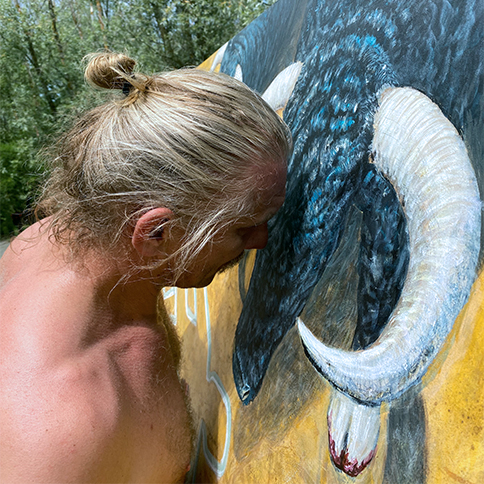
Artist in red Shirt showing his signature on painting

Despite these attempts to suppress its message, Ferdinand’s story continued to resonate with readers around the world, and Walt Disney’s 1938 animated adaptation became a beloved classic, earning an Academy Award.

New Understanding of Bullfighting and the Ferdinand’s Tale

Civilón’s story initially stirred the imagination of Munro Leaf, an American writer of children literature, to write the “Story of Ferdinand” as a creative prompt for his friend, illustrator Robert Lawson. He wrote the story on a paper pad in less than an hour, wanting to awaken Lawson’s artistic imagination out of a lull. Leaf’s tale embraced diversity and pacifism, denouncing the brutality of violence and death. As time passed, it was attributed political agenda and sparked considerable controversy because Ferdinand was regarded as a pacifist symbol by some. Eventually the book fell under the ban in Franco’s Spain and was burned as propaganda in Nazi Germany. Walt Disney transformed it into a cherished animated masterpiece Ferdinand the Bull that earned the Oscar in 1938.

I don’t know about you, but I had been oblivious my entire life about the background of the beloved cartoon character from our childhood. In fact, I knew very little about the bullfighting and never witnessed it first-hand. As an animal lover and a long-time vegetarian, I’ve never been particularly drawn to this blood splashing spectacle. My entire understanding of the corrida is primarily drawn from studying the life of Civilón while preparing to paint this series. However, one thing has remained constant throughout my life: a profound respect for the strength and bravery of these magnificent creatures. I have always found myself drawn to the stories of Ferdinand and Civilón, instinctively siding with the bull.

The Dual Motivation behind the Series

The drive behind my decision to start this series was twofold. Firstly, I was deeply inspired by the revelation of the true-life story behind Ferdinand – a character that had accompanied me since childhood. This discovery ignited a desire to explore the deeper meaning behind the beloved children’s story and translate that into a series of impactful artworks. Secondly, and perhaps more importantly, I sought to convey the powerful anti-war message embedded within the “Civilón” paintings. The profound resonance of the anti-war sentiment, which I keenly experienced while delving into Civilón’s life events, aligns intimately with my own sentiments and experience of the world. Much like the tragic fate that befell Civilón at the hands of soldiers, the stark reality of his demise mirrors the ongoing global conflicts that continue to unfold before our eyes. By retelling Civilón’s life story, I want to evoke a reflection on the devastating impact of conflicts and contribute to the collective dialogue against war, for a world of compassion, understanding, and peace.

Second motive behind my decision to start this particular art project was a practical one. I already painted several bull paintings which had been met with a lot of admiration and praise. So, as I started this new journey, transitioning my life from the construction project management to art making, the choice was clear and logical – painting the bull series became the most significant project in my career as an emerging artist.

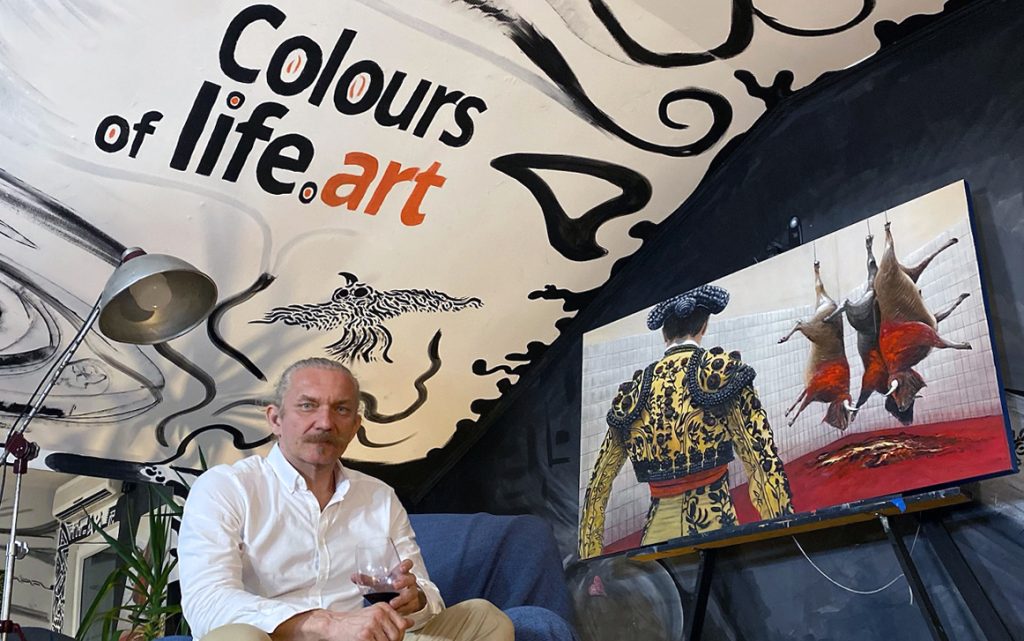
Aleksandar Petkovic with Civilón Painting

Capturing the Essence of Civilón

In essence, the paintings serve as a tribute to Civilón, an attempt to immortalize him, if only for an ephemeral moment. While the details are intentionally sparse, the foreground takes precedence in each piece, with shadows adding a distorted, unpredictable dimension. Some of the backgrounds are made using a pouring technique – a method based on unpredictable movement of paint that reflects the unpredictability of life itself, much like the unexpected turns in Civilón’s life. The color palette and textures in this painting series serve as a nuanced reflection of the fundamental elements in the corrida – the golden sand, the vivid hues of blood, the rugged texture of the bull’s leather, the sharp contours of horns and hooves, all set against the expansive canvas of the azure sky.

To highlight the profound essence of the narrative, I have rendered the central characters, Civilón and his herd, in a stark, minimalist style. I’ve deliberately left out extraneous elements, focusing instead on the raw emotions that emerge when the animal confronts its adversary. The spotlight rests on short moments that brim with anticipation—just before or after the fight, a fleeting touch, a questioning gaze, or a challenging assessment.

I’ve striven to capture a sense of fluidity, evoking the changing frames of a film. Civilón’s life is portrayed in all its facets—from his youthful innocence, the chilling foreknowledge of death upon observing a truck filled with animals destined for the slaughterhouse, to his tragic end. I used ballerinas in some paintings to embody life’s intricate dance of fate. Their graceful forms are also there to echo the artistic moves of matadors that resemble a form of modern and timeless dance. Finally, in one of the paintings, the ballerina emerges as a symbolic personification of the bull (“Dance Me to the End of Fight“), offering a reflection on the assertion that bullfighting is not merely a sport but an intricate art form. The juxtaposition of the delicate yet powerful ballerina against the backdrop of bullfighting elements sparks contemplation on the duality inherent in this controversial practice.

Who Is Civilón & What Really Happened?

Civilón was the darkest and most acclaimed bull at Don Juan Cobaleda’s farm, bred as a toro bravo and destined for the bullfighting ring. He passed all the tests with flying colours and was chosen for corrida. While waiting to be shipped to Valencia for his first fight, he got into a fight with two other bulls at the farm and had to wait until his wounds healed.

Don Juan had a daughter Carmelita, who was only seven years old when he found her petting the wounded bull and feeding him flowers. Picture the scene: a captivating juxtaposition of contrasts as the black beast delightedly nibbled on flowers offered by the little girl’s hands. Don Juan, undoubtedly taken aback yet mesmerized, witnessed a stroke of fate in the touch of Carmelita’s hand. Naturally, the news spread like wildfire, capturing the attention of Spanish newspapers and drawing other curious children to the farm, armed with bouquets to nourish the amiable creature.

A Change of Fate in the Shadow of War

However, the idyllic charm of the story takes an unexpected turn in the spring of 1936 when Franco’s fascist forces cast their menacing shadow over Barcelona. In the meantime, Civilón’s wounds healed and while Carmelita was all in tears and begging her father to keep him at the farm; Don Juan was determined to send him to corrida. His decision was very much welcomed by the manager of the Barcelona’s bullring who summoned Civilón for epic showdown.

The arena thrummed with anticipation as countless spectators gathered, craving a glimpse of the flower-devouring bull that had warmed the hearts of children, now facing the bloodthirsty threat within the ring. The customary spectacle unfolded: picadors pierced Civilón’s flesh between his shoulders, and in response, the bull charged and fought back, his primal instincts ignited by the assault. The crowd roared in a tumultuous blend of awe and anticipation. And then, amid the chaos, a voice rang out—Don Juan’s voice, calling out the wounded, ebony beast. A hush fell over the arena, capturing the attention of every onlooker. Civilón, his gaze fixed on Don Juan, approached, tenderly leaning his head for a soothing caress. It was a moment that transcended the brutality. No amount of violence could erase the bull’s memory of kindness and trust in humanity!

The Nobility, Pardon and a Woman’s Voice: The Final Twist

In that profound moment, the cruel fervor within the spectators softened, and humanity and compassion emerged from the depths of their bloodthirsty hearts. The audience, profoundly moved by the bull’s display of nobility, known as “nobeleza,” witnessed an extraordinary occurrence. As the matador approached, ready to deliver the final blow between Civilón’s shoulders, a woman’s voice pierced the air, crying out for “un indulto”—a pardon that would spare the bull from death, a recognition of his bravery and nobility. In an instant, the crowd rose to its feet, and a unified chorus resounded, echoing through the arena—un indulto, un indulto, un indulto! And so, the pardon was granted. The noble toro bravo, saved by the voice of a woman, as the newspapers would report, was first escorted to the city stables to recover before returning to the verdant pastures of his home.

The final twist in the tale unfolded two weeks later, while Civilón still convalesced in Barcelona stables. Franco’s fascist forces stormed into the city.  In the ravaging spree, a group of soldiers breached the city stables, brutally slaying Civilón and consuming his flesh for lunch. The resistance forces would eventually repel the invaders that evening, albeit too late for Civilón. The Spanish Civil War would soon erupt in all its fury, followed by the cataclysm of the Second World War, casting the final shadow upon this enigmatic tale.

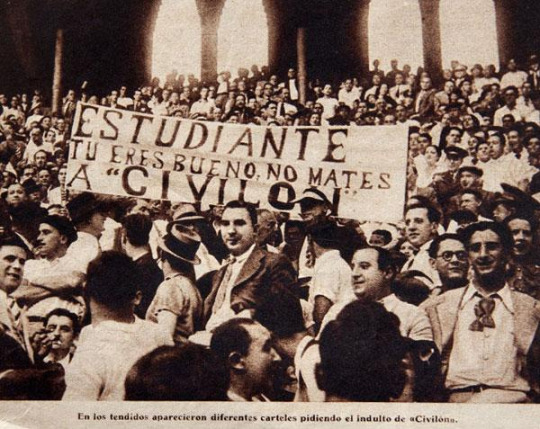
audience corrida at Barcelona sepia image
Bull eat flowrs from boy`s hand

The Art of Facing the Danger of Death

While preparing for this series, I explored the work of other artists whose creations, diverse in style and interpretation, were inspired by bulls and bullfighting. Needless to say, all paths have led to Hemingway.

Hemingway’s deep understanding of bullfighting shone through his writings, capturing the essence of the sport as an embodiment of profound themes. With eloquence and conviction, he expressed his perspective on bullfighting as a fusion of tragedy, beauty, and an ultimate test of courage. In his words, “Bullfighting is the only art in which the artist is in danger of death and in which the degree of brilliance in the performance is left to the fighter’s honor.

To Hemingway, bullfighting went far beyond mere spectacle; it bore the weight of a metaphor for life itself. He believed that within the bullring, individuals had an opportunity to confront the ever-present specter of death and grapple with their own mortality. One of the paintings was named after the name of Hemingway’s novel “Death in the Afternoon”. In the work of the same name, Hemingway says:   In his renowned book “Death in the Afternoon,” he articulated this sentiment, stating, “The only place where you could see life and death, i.e. violent death now that the wars were over, was in the bullring and I wanted very much to go to Spain where I could study it.”

The bullfight, according to Hemingway, symbolized a profound struggle against fate, a relentless quest for honor and courage. It reflected the human condition, showcasing the inherent battles individuals faced in their lives. He saw in the bullfighters an embodiment of his own artistic principles, as he stated, “There are only three sports: bullfighting, motor racing, and mountaineering; all the rest are merely games.” For Hemingway, these endeavors demanded an unwavering spirit and the willingness to confront and overcome challenges, mirroring the struggles faced by writers in their pursuit of creating impactful and meaningful work.

Hemingway’s passion for bullfighting and his belief in its metaphorical significance were echoed in his own approach to writing. He saw writing as an art form that required the same grit and determination exemplified in the bullring.

My Affinity for Civilón and His Human Encounters

I, too, find myself somewhat entwined with this sentiment when contemplating Civilón the bull. While Hemingway’s passion for bullfighting was rooted in his profound appreciation for its artistry, bravery, and the ritualistic aspects that encompassed the spectacle, my admiration is more firmly anchored in the intricate dynamics that unfolded between Civilón and the humans whose lives intersected with his own. From his glory days adorning the covers of Spanish magazines, to the pivotal moment of his pardoning within the bullring, celebrated for his noble nature, to the heartrending descent amidst the chaos of war, Civilón’s story unfolded in a manner that touched me to the core.

What strikes me the most is the profound symbolism found in the clear-cut contrast of the brutality and nobility of human nature, as exemplified by the intense fight between the toreador and the bull. Yet, in the extraordinary case of Civilón, this symbolism extends far beyond the confines of the bullring, permeating every aspect of his life.

Civilón’s life deviated from the usual tracks several times. An injury received in a fight with his herd delayed his journey to the bullfight in Valencia and a certain death. His friendship with the ranch owner’s daughter attracted media attention, and the subsequent interest from animal lovers gave Civilón a chance to survive the bullfight. But then, the madness of war and the hunger of soldiers abruptly ended his life. A journey of ups and downs! The war took away his chance of living every bull’s dream life – happily ever after at a farm, surrounded by many a beautiful cows.

Civilón’s story shattered the illusion of a peaceful ending as depicted in the cartoon. His end was marked by violence, noise, and laughter, with the pavement blood-stained and littered with his flesh. I often wonder about the moment when Civilón’s potential executioner, Toreador Estudente, looked at him during the bullfight while picadors jabbed a spear into his neck muscle. I wonder if Civilón remembered the day when the toreador, dressed in a less flamboyant suit, offered him flowers instead of a sword while posing for the photographer.

Resilience, Fate and the Power of Art

 This painting series is an exploration of empathy, mortality, and the inescapable unpredictability of life, all embodied in the poignant tale of Civilón, a bull whose life and death inspire and move me as an artist.

In the tapestry of my life and artmaking, Civilón emerges as a poignant reflection of my own journey. Both our narratives serve as a testament to the resilience within. We both danced to the whims of fate, treading the fragile line between life and death, echoing the deep anti-war sentiments that have shaped our paths. In the face of adversity, Civilón discovered an unparalleled strength. Though he was defeated by the circumstances around him, his spirit never wavered, never surrendered and he never lost faith. The profound role of art in this world is in capturing such relentless spirits and inspiring stories that have the transformative power. It fills me with immense joy to be a conduit for this amazing task…to put such stories on canvas and serve them to the world.

Share with friend

SHARE

FOLLOW

RECENT POSTS

SUBSCRIBE


SHARE

RELATED POSTS

0 Naslovna Blog

Bullfighting Symbolism in Paintings: Civilón and Hemingway

Few subjects in art carry as much raw emotion and cultural weight as bullfighting symbolism in paintings. Ernest Hemingway’s Death in the Afternoon immortalized the Spanish corrida in literature, while the series Civilon captures...
0 Naslovna Blog

Exploring the Artistic Journey of "Casual Cruelty": A Reflection on Art and Social Commentary

Art possesses a unique ability to evoke deep emotions, provoke thought, and spark conversations about society’s most pressing issues. Painting “Casual Cruelty,” from the “Civilón – The Bull Who Ate Flowers” series,...
on this black and white image Hamingway writer with smile on face sitting on grass near bull and touching bull near horns

The Power of Research: Creating Paintings of the Bull Civilón

“The journey of artistic transformation began with a simple decision: to dedicate myself to the creation of art. This exploration led me to the story of Civilón, a bull whose fate became...

FIND MORE …

Bullfighting Symbolism in Paintings: Civilón and Hemingway

Few subjects in art carry as much raw emotion and cultural weight as bullfighting symbolism in paintings. Ernest Hemingway’s Death in the Afternoon immortalized the Spanish corrida in literature, while the series Civilon captures its visceral drama on canvas. This article explores the artist’s journey initially inspired by the Ferdinand story, culminating in the creation of the “Civilón” series. Every painting offers
Read More

Exploring the Artistic Journey of “Casual Cruelty”: A Reflection on Art and Social Commentary

Art possesses a unique ability to evoke deep emotions, provoke thought, and spark conversations about society’s most pressing issues. Painting “Casual Cruelty,” from the “Civilón – The Bull Who Ate Flowers” series, serves as a powerful example of this artistic potential. This piece reflects on the harsh realities faced by animals and draws inspiration from the impactful works of other

Read More

Gone with a River: Ephemeral Art

“The abandoned art gallery, transformed into my ephemeral art atelier, became a symbol of both creativity and impermanence. Nestled among the trees on Karlovačka Ada, this space changed everything. Island atelier, built on sand, surrounded by trees, and kissed by the river’s breeze, stood as a testament to the creativity and impermanence that defined my journey. But just as the
Read More
Three collaborative paintings displayed on a rustic bamboo wall, showcasing the diversity of shared artistic expression.

The Power of Collaboration: Creating Friendship Through Art

“The magic of art collaboration lies in its ability to unite people – the power of collaboration to create long lasting friendship. In working together, we build connections, creating something far more meaningful than we could alone. This shared creative process fosters mutual inspiration and leads to creative growth” Social Creativity: How Collaboration Fuels Artistic Growth The power of collaboration
Read More
Behind the canvas of Aleksandar Petkovic's artistic journey

Behind the Canvas: A Wife’s Story

“Behind the canvas of my husband’s artistic journey lies a story of passion, dedication, and transformation. Art is meant to speak to your soul. When you buy a piece of art from an artist, you’re not just buying a beautiful object. You’re buying hundreds of hours of dedicated work, including failures and experimentation You’re buying days, weeks, and months of
Read More
Mountain Landscape Painting

The Impassable Borders of My World

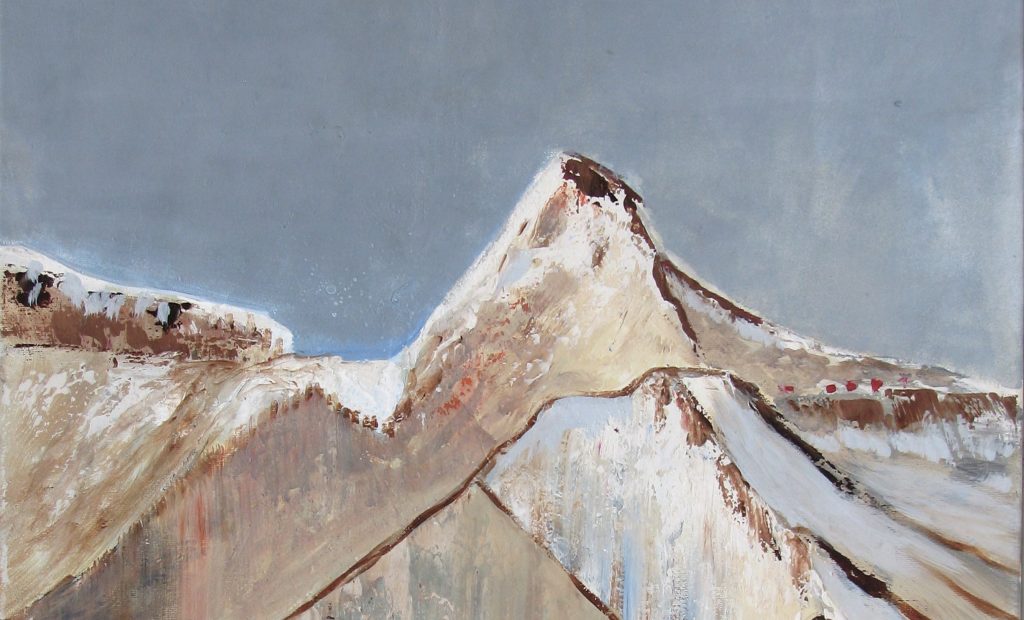
Art starts somewhere, right? For me, mountains set the stage. While my transformative artistic journey started in the summer of 2020, the love of art and nature seemed to have always been there. Growing up in Lika, Croatia, my childhood revolved around towering presence of mountains. Mountains of My Childhood Mountains inspired me to create series of paintings “Journey to
Read More

Love of Nature & Embracing its Resilience

Ever since childhood, my love for nature has remained an unwavering part of who I am. Unlike my childhood that was marked by the towering presence of the mountains, my teenage and student years revolved around completely different natural settings in Serbia, where I moved in 1991. Summers on Danube As a teenager, I started camping on Danube with friends.
Read More

My Journey Begins – A Path Shaped by Choice or Chance

The life-changing moment that brought me where I am today occurred during the Covid-19 pandemic. I had left Dubai and my construction business just before the pandemic broke and was taking a break in Serbia, planning to move on to Africa after a while to pursue a construction business there. However, life had different plans for me. The borders were
Read More
Dolores at Mt Everest

The ubreakable bond between people, art and nature

Years ago, amidst the vibrant cityscape of Abu Dhabi, I encountered a force of nature named Dolores Al Shelleh. Her energy and quick wit were captivating and we instantly connected. We’ve become very good friends since. Her spirit astounds me to this day for she embodies that rare breed of individuals who exude an electrifying presence, breaking free from the
Read More

Summer Home on the Danube

A Life on the River For over two decades, August has been synonymous with the Danube and it has been my summer home – a time of simple pleasures and boundless freedom. This journey began decades ago, during my final year of secondary school, when a small group of friends and I established our summer camp along the riverbank, just
Read More
on this black and white image Hamingway writer with smile on face sitting on grass near bull and touching bull near horns

The Power of Research: Creating Paintings of the Bull Civilón

“The journey of artistic transformation began with a simple decision: to dedicate myself to the creation of art. This exploration led me to the story of Civilón, a bull whose fate became a poignant symbol of the war’s tragic consequences.” Every Journey Begins with a Decision Every journey, including the creation of the series of paintings “Civilón – The Bull
Read More

The Artistic and Cultural Debate Surrounding Bullfighting

The debate about whether bullfighting is an art form or a brutal sport is complex and multifaceted. Several paintings from series of paintings “Civilion” portrays a delicate balance between a ballerina and a matador, blending grace and strength. Paintings serves as a visual exploration of this controversy. The ballerina symbolizes the bull, her movements embodying grace and power. Her elegance
Read More