
Skip to content

Exploring the Artistic Journey of “Casual Cruelty”: A Reflection on Art and Social Commentary

Art possesses a unique ability to evoke deep emotions, provoke thought, and spark conversations about society’s most pressing issues. Painting “Casual Cruelty,” from the “Civilón – The Bull Who Ate Flowers” series, serves as a powerful example of this artistic potential. This piece reflects on the harsh realities faced by animals and draws inspiration from the impactful works of other artists, notably Banksy. In this blog post, I’ll explore the narrative and inspiration behind “Casual Cruelty,” delve into its connections with Banksy’s iconic pieces, and reflect on the broader messages conveyed through this powerful artwork.

The Story Behind "Casual Cruelty"

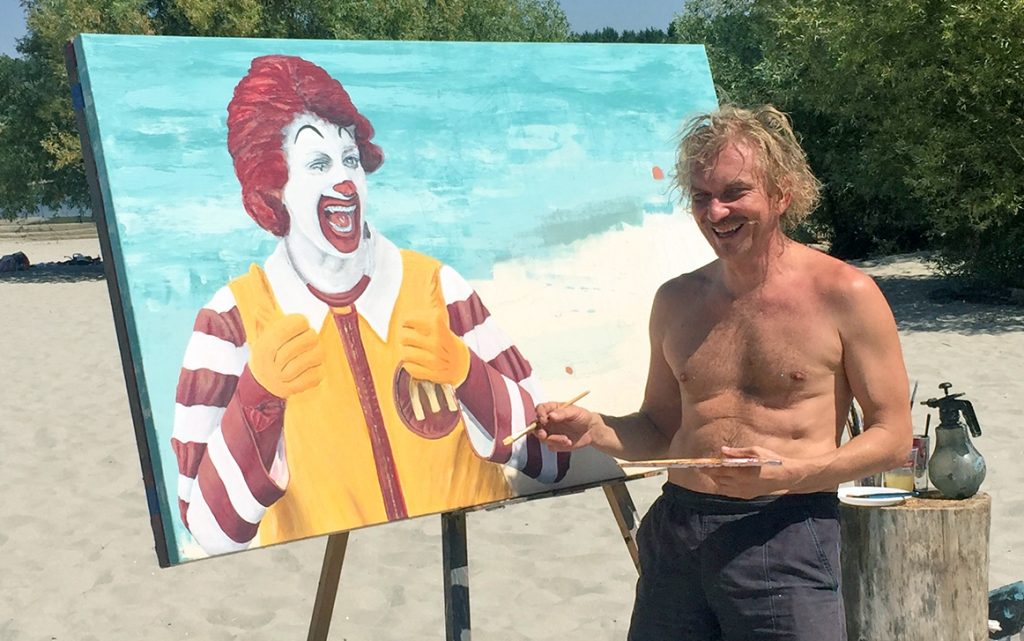
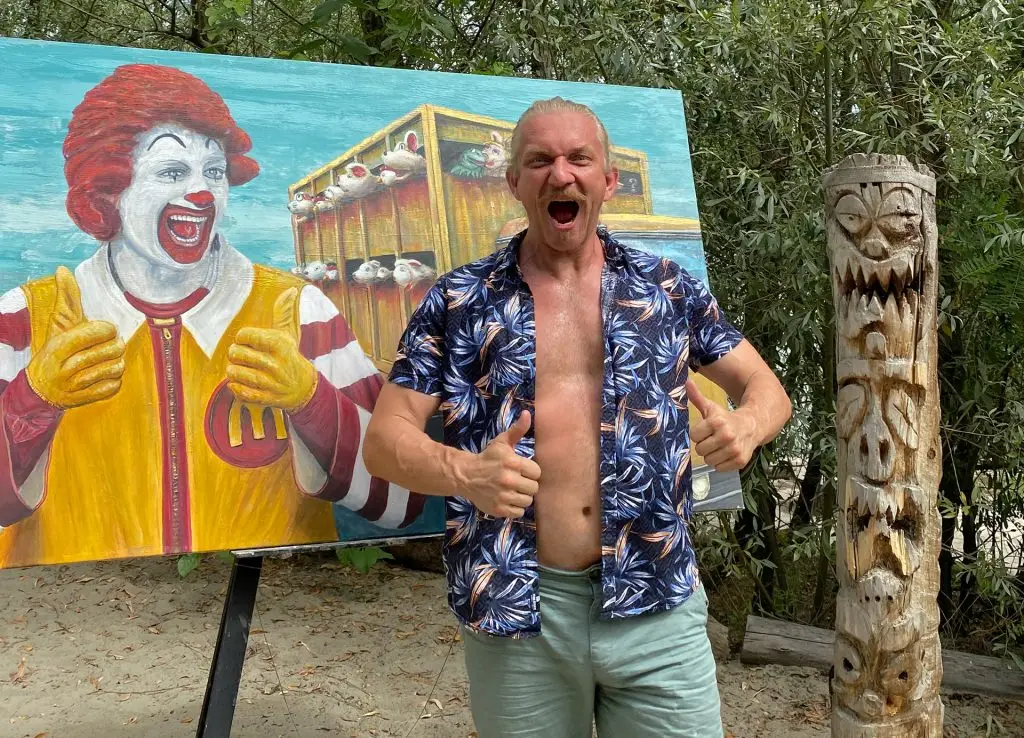
“Casual Cruelty” presents a surreal and haunting scene where childhood innocence meets stark reality. The painting features a disturbing image of a clown, resembling Ronald McDonald, laughing maniacally in the foreground. Behind him, a whimsical truck carries curious animals and cartoon characters, seemingly blissful yet ignorant of their grim destination. This juxtaposition of fantasy and brutality echoes the chilling message found in Banksy’s “Sirens of the Lambs.”

The narrative of “Casual Cruelty” delves into the contrasting lives of animals bred for different purposes. Bulls raised for bullfighting, known as “toro de lidia,” experience a life of relative freedom until their ultimate fate in the arena. In stark contrast, bulls bred for human consumption live a harsh existence, chained in barns, seldom seeing the sky or feeling the grass. Their final journey to the slaughterhouse is marked by a tragic irony—they experience the open sky and green fields for the first time during their last moments.

Through this painting, I aim to highlight the grim fate awaiting these creatures and draw parallels with the stories of Ferdinand, the gentle bull who preferred flowers over fighting, and Civilón, whose remarkable life was marked by public adoration and a tragic end. The vibrant yellows and reds set against a serene turquoise backdrop amplify the emotional intensity and the disturbing juxtaposition of innocence and cruelty.

Banksy's Influence

"Sirens of the Lambs" and the Inspiration for "Casual Cruelty"

Banksy, the elusive and provocative street artist, has created numerous works that challenge societal norms and critique various aspects of modern life. His art, known for its powerful social commentary and subversive humor, has profoundly influenced my own artistic vision. One of Banksy`s pieces, “Sirens of the Lambs,” features a truck filled with stuffed animals being driven around the streets of New York City. The animals, appearing frightened and bewildered, peer out from the truck’s compartments, evoking a strong emotional response from onlookers.

“Sirens of the Lambs” serves as a poignant commentary on the meat industry and the often-overlooked suffering of animals destined for slaughter. By placing these stuffed animals in a context that resembles transportation to a slaughterhouse, Banksy forces viewers to confront the harsh realities behind the meat they consume. The piece is a powerful critique of consumer culture and the casual cruelty inflicted on animals for the sake of convenience and profit.

In “Casual Cruelty,” I draw inspiration from one more Banksy’s work, “Napalm“, using a similar motif of a truck carrying innocent creatures to their doom. The inclusion of familiar cartoon characters and the Ronald McDonald figure adds a layer of surrealism and dark humor, making the viewer question the innocence of these symbols and their role in perpetuating consumerism and animal cruelty. A question mark on the truck signifies the uncertainty of who is next, adding to the haunting message of inevitable fate.

The Social Critique of Ronald McDonald in "Casual Cruelty"

The choice of Ronald McDonald as a central figure in “Casual Cruelty” is both deliberate and impactful. Ronald McDonald, the iconic mascot of the global fast-food chain McDonald’s, is a symbol of childhood joy and innocence. However, in this painting, he is depicted in a grotesque and disturbing manner, his laughter echoing through the canvas as he gives a thumbs-up with both hands.

This portrayal of Ronald McDonald serves as a poignant critique of the fast-food industry and its role in promoting unhealthy eating habits while often contributing to animal suffering. The cheerful clown, often associated with happy meals and fun, is transformed into a sinister figure, highlighting the dark side of the industry he represents.

Banksy, a renowned street artist known for his powerful social commentary, has also utilized Ronald McDonald in his works to convey profound messages. In one of his pieces, Ronald McDonald and Mickey Mouse are depicted holding hands with a terrified young Vietnamese girl, a reference to the famous photograph of Kim Phuc running from a napalm attack during the Vietnam War. This juxtaposition of beloved childhood characters with the horrors of war underscores the hypocrisy and moral ambiguities that exist within society.

By incorporating Ronald McDonald into “Casual Cruelty,” I align with Banksy’s approach, using familiar symbols to challenge viewers’ perceptions and provoke thought about the underlying issues. The painting becomes a powerful vehicle for social critique, questioning the impact of consumer culture on both humans and animals.

Reflecting on Media Influence

The Pepé Le Pew Controversy and Beyond

The recent controversy surrounding the animated character Pepé Le Pew sparked a significant debate on media influence and the portrayal of characters in popular culture. When the character was removed from the upcoming “Space Jam” sequel due to concerns about potentially promoting negative stereotypes and normalizing inappropriate behavior, it ignited a lively discussion on social media and in the mainstream media. This debate underscored the critical role that media plays in shaping our perceptions and influencing societal norms and values, highlighting the importance of careful consideration of the messages conveyed through popular culture.

This discussion extended beyond Pepé Le Pew, with some users calling for the “cancellation” of Miss Piggy from “The Muppets,” arguing that her behavior towards Kermit the Frog also perpetuates negative social behaviors. These debates demonstrate the ongoing conversation about the portrayal of characters in media and the potential impact of these portrayals on societal attitudes and behaviors.

In “Casual Cruelty,” the use of familiar and beloved characters like Ronald McDonald and cartoon animals serves to question their roles in shaping our perceptions and behaviors. The painting challenges viewers to reconsider the impact these characters have on our understanding of the world and encourages a critical examination of the messages conveyed through popular media.

Artist joyfully jumps in front of the "Casual Cruelty" surreal animal rights painting on a sandy beach on a summer day.

"Casual Cruelty": A Reflection on Cruelty, Compassion, and Media

“Casual Cruelty” delves deep into the poignant themes of cruelty, compassion, and the profound influence of media on our perceptions. The painting serves as a stark reminder of the suffering endured by animals, often hidden from public view. It calls for greater awareness and compassion, urging viewers to reflect on their choices and the consequences of their actions.

The inclusion of cartoon characters and the whimsical truck within the artwork effectively highlights the role of media in shaping public perception. Just as Banksy’s works utilize powerful imagery to convey strong social messages, “Casual Cruelty” employs familiar symbols to draw attention to uncomfortable truths and challenge viewers to look beyond the surface and consider the deeper implications of their consumption habits.

From Inspiration to Creation

The Journey of "Casual Cruelty"

As an emerging artist, my journey has been deeply influenced by personal experiences and reflections on life, death, and the treatment of animals. Growing up in regions affected by war, I witnessed firsthand the brutal realities of violence and the profound impact it has on both humans and animals. These experiences have profoundly shaped my artistic vision, inspiring me to create works that challenge viewers to reflect on the ethical and moral implications of our actions.

“Casual Cruelty” is a culmination of this artistic journey, where I seek to evoke a disturbing yet thought-provoking feeling of blood and contrast, challenging viewers to confront the stark realities of animal cruelty. Through this painting, I aim to spark a conversation about fate, mortality, and the treatment of animals, inviting viewers to explore the profound narrative of life, death, and the haunting silence that follows.

A Final Reflection

The Power of Art to Inspire Change

“Casual Cruelty” is more than just a visual representation; it is a powerful commentary on the casual cruelty inflicted on animals and the broader societal implications of our actions. By drawing inspiration from the works of artists like Banksy and incorporating familiar symbols like Ronald McDonald, the painting challenges viewers to reflect on their choices and the impact of consumer culture on both humans and animals.

As you explore “Casual Cruelty,” I invite you to consider the deeper meanings behind the artwork and the narratives that shape our understanding of cruelty, compassion, and media influence. This painting is a testament to the power of art to evoke deep emotions, provoke meaningful conversations, and ultimately inspire positive change in our world. Through this work, I hope to spark a dialogue about the ethical and moral implications of our actions and encourage a greater sense of compassion and awareness in our everyday lives.

Artist mimics Ronald McDonald's pose in front of the "Casual Cruelty" surreal animal rights painting, highlighting the connection between fast-food mascots and animal cruelty.
Share with friend

SHARE

FOLLOW

RECENT POSTS

SUBSCRIBE


SHARE

RELATED POSTS

0 Naslovna Blog

Bullfighting Symbolism in Paintings: Civilón and Hemingway

Few subjects in art carry as much raw emotion and cultural weight as bullfighting symbolism in paintings. Ernest Hemingway’s Death in the Afternoon immortalized the Spanish corrida in literature, while the series Civilon captures...
A powerful image of Civilón, the real-life bull who inspired the beloved children's story character Ferdinand, standing in a bullring. The image depicts the majestic animal facing the crowd, conveying a sense of strength, resilience, and the anti-war message embedded in the "Civilón" painting series.

Civilón – The Bull who Loved to Eat Flowers

“Bullfighting is the only art in which the artist is in danger of death and in which the degree of brilliance in the performance is left to the fighter’s honor.” (E. Hemingway)...
on this black and white image Hamingway writer with smile on face sitting on grass near bull and touching bull near horns

The Power of Research: Creating Paintings of the Bull Civilón

“The journey of artistic transformation began with a simple decision: to dedicate myself to the creation of art. This exploration led me to the story of Civilón, a bull whose fate became...

FIND MORE …

Bullfighting Symbolism in Paintings: Civilón and Hemingway

Few subjects in art carry as much raw emotion and cultural weight as bullfighting symbolism in paintings. Ernest Hemingway’s Death in the Afternoon immortalized the Spanish corrida in literature, while the series Civilon captures its visceral drama on canvas. This article explores the artist’s journey initially inspired by the Ferdinand story, culminating in the creation of the “Civilón” series. Every painting offers

Read More

Gone with a River: Ephemeral Art

“The abandoned art gallery, transformed into my ephemeral art atelier, became a symbol of both creativity and impermanence. Nestled among the trees on Karlovačka Ada, this space changed everything. Island atelier, built on sand, surrounded by trees, and kissed by the river’s breeze, stood as a testament to the creativity and impermanence that defined my journey. But just as the
Read More
Three collaborative paintings displayed on a rustic bamboo wall, showcasing the diversity of shared artistic expression.

The Power of Collaboration: Creating Friendship Through Art

“The magic of art collaboration lies in its ability to unite people – the power of collaboration to create long lasting friendship. In working together, we build connections, creating something far more meaningful than we could alone. This shared creative process fosters mutual inspiration and leads to creative growth” Social Creativity: How Collaboration Fuels Artistic Growth The power of collaboration
Read More
Behind the canvas of Aleksandar Petkovic's artistic journey

Behind the Canvas: A Wife’s Story

“Behind the canvas of my husband’s artistic journey lies a story of passion, dedication, and transformation. Art is meant to speak to your soul. When you buy a piece of art from an artist, you’re not just buying a beautiful object. You’re buying hundreds of hours of dedicated work, including failures and experimentation You’re buying days, weeks, and months of
Read More
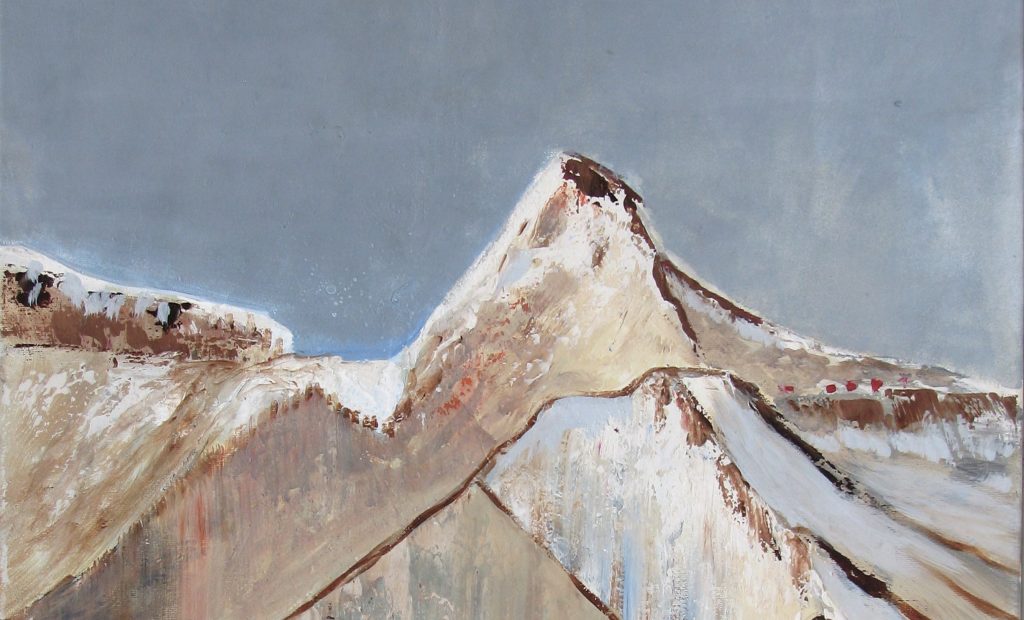
Mountain Landscape Painting

The Impassable Borders of My World

Art starts somewhere, right? For me, mountains set the stage. While my transformative artistic journey started in the summer of 2020, the love of art and nature seemed to have always been there. Growing up in Lika, Croatia, my childhood revolved around towering presence of mountains. Mountains of My Childhood Mountains inspired me to create series of paintings “Journey to
Read More
A powerful image of Civilón, the real-life bull who inspired the beloved children's story character Ferdinand, standing in a bullring. The image depicts the majestic animal facing the crowd, conveying a sense of strength, resilience, and the anti-war message embedded in the "Civilón" painting series.

Civilón – The Bull who Loved to Eat Flowers

“Bullfighting is the only art in which the artist is in danger of death and in which the degree of brilliance in the performance is left to the fighter’s honor.” (E. Hemingway) The Artist’s Journey From Ferdinand to Civilón This blog post explores the artistic journey of an emerging artist inspired by the true story of Civilón, the real-life bull
Read More

Love of Nature & Embracing its Resilience

Ever since childhood, my love for nature has remained an unwavering part of who I am. Unlike my childhood that was marked by the towering presence of the mountains, my teenage and student years revolved around completely different natural settings in Serbia, where I moved in 1991. Summers on Danube As a teenager, I started camping on Danube with friends.
Read More

My Journey Begins – A Path Shaped by Choice or Chance

The life-changing moment that brought me where I am today occurred during the Covid-19 pandemic. I had left Dubai and my construction business just before the pandemic broke and was taking a break in Serbia, planning to move on to Africa after a while to pursue a construction business there. However, life had different plans for me. The borders were
Read More
Dolores at Mt Everest

The ubreakable bond between people, art and nature

Years ago, amidst the vibrant cityscape of Abu Dhabi, I encountered a force of nature named Dolores Al Shelleh. Her energy and quick wit were captivating and we instantly connected. We’ve become very good friends since. Her spirit astounds me to this day for she embodies that rare breed of individuals who exude an electrifying presence, breaking free from the
Read More

Summer Home on the Danube

A Life on the River For over two decades, August has been synonymous with the Danube and it has been my summer home – a time of simple pleasures and boundless freedom. This journey began decades ago, during my final year of secondary school, when a small group of friends and I established our summer camp along the riverbank, just
Read More
on this black and white image Hamingway writer with smile on face sitting on grass near bull and touching bull near horns

The Power of Research: Creating Paintings of the Bull Civilón

“The journey of artistic transformation began with a simple decision: to dedicate myself to the creation of art. This exploration led me to the story of Civilón, a bull whose fate became a poignant symbol of the war’s tragic consequences.” Every Journey Begins with a Decision Every journey, including the creation of the series of paintings “Civilón – The Bull
Read More

The Artistic and Cultural Debate Surrounding Bullfighting

The debate about whether bullfighting is an art form or a brutal sport is complex and multifaceted. Several paintings from series of paintings “Civilion” portrays a delicate balance between a ballerina and a matador, blending grace and strength. Paintings serves as a visual exploration of this controversy. The ballerina symbolizes the bull, her movements embodying grace and power. Her elegance
Read More