




The ART of DANGER
The Bull, the Ballerina, and the Abyss: Exploring Life and Death in Art “The Art of Danger” is a visually arresting surreal ballet bull large size painting that portrays the surreal and dramatic interplay between life and death. This painting features a powerful black bull, a woman in white, and a troupe of ballet dancers, all set against an

DISTANT SPECTATORS
Lack of Empathy This large size painting explores emotional disconnection in the aftermath of a bullfight. Coral red and turquoise blue details, immersed in the sand surface, tell a tale of the aftermath—a bullfight’s conclusion. The bull lies motionless; a silent witness to the arena’s fleeting drama. Men in red shirts diligently clean the arena, preparing it for the

KARATE BULL
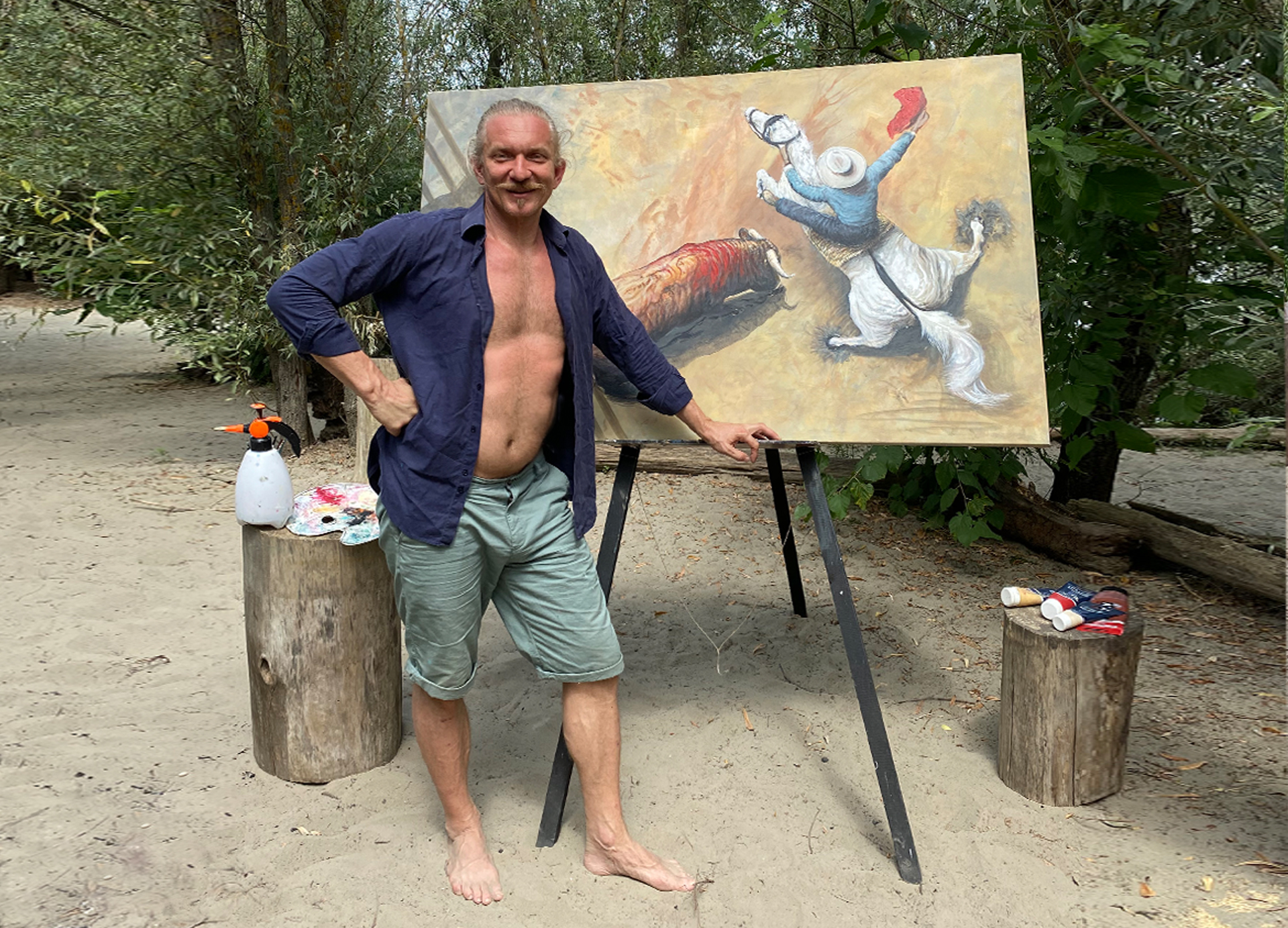
Bull With Gentle Heart This striking portrayal in this surreal bull art challenges traditional perspectives in bullfighting, inviting viewers to appreciate the beauty of movement and defiance. In front of the bull, a man riding a horse is depicted, dressed in traditional matador or picador attire, complete with a decorative jacket, tan pants, and a white hat. The horse
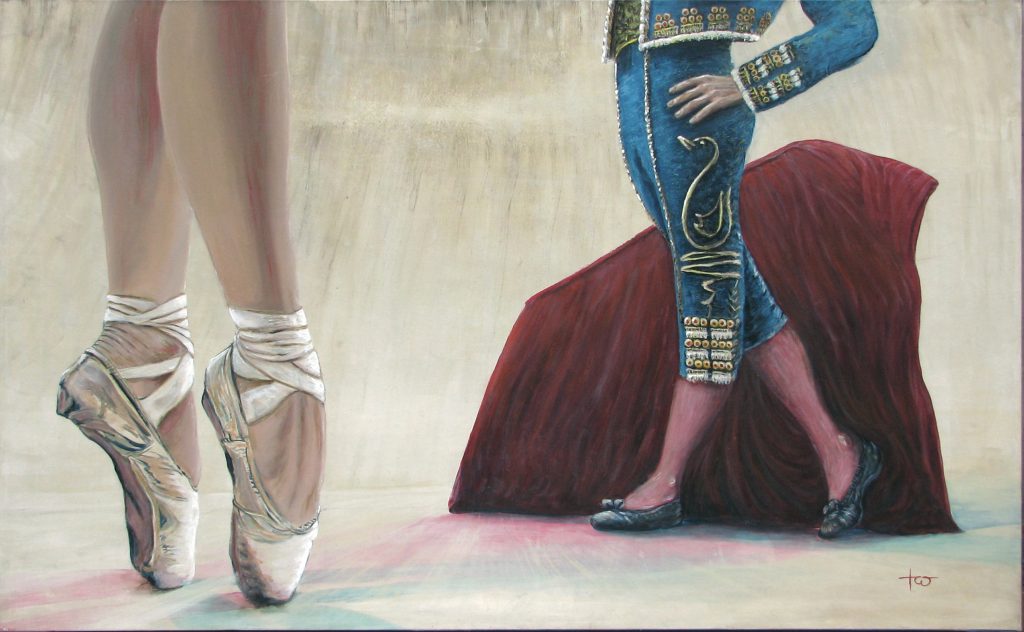
WOULD YOU LIKE TO DANCE UNTIL THE DEATH
Ballet and Bullfighting Ballet and Bullfighting: A Cultural Dialogue This ballet bullfighting artwork depicts a juxtaposition of two iconic cultural symbols: a ballet dancer and a matador. This artwork exploring ballet and bullfighting captures the essence of both traditions. The background in this ballet bullfighting artwork is muted, ensuring that the focus remains on the two figures. The contrast

DEATH IN THE AFTERNOON
Toreador and Fallen Bulls Exploration of Life, Death, and the Haunting Silence That Follows This disturbing painting, “Death in the Afternoon,” depicts a toreador standing amidst the lifeless bodies of fallen bulls, a stark contrast between the vibrant hues of the matador’s costume and the somber reality of death. A moment of silence. The smell of blood. Bracing for

CRIME SCENE
Vulnerability and Tragedy This provocative bull painting, “Crime Scene,” by emerging artist Aleksandar Petkovic presents a haunting and provocative composition that challenges the viewer’s perception of aggression and justice. Two majestic Toro Bravos, adorned with sleek black heads and white horns, take center stage in this bullfighting artwork, their powerful presence captivating the canvas. The raw, minimalist composition allows
A KISS OF FRIENDSHIP
The Cover Story Power of Media One particular photograph, featured on the cover of the “Estampa,” became the inspiration for this poignant animal human bond painting. The image of the little girl nurturing the injured bull became iconic, transforming Civilón from a mere participant in the brutal world of bullfighting into a symbol of pacifism and compassion. In the

DANCE ME TO THE END OF FIGHT
A Sensual Ballet: Carmen and the Bullring Imagine standing in front of a matador, vulnerable, with a deep breath, ready for his next move. The air is thick with anticipation, and the subtle tension between power and grace is palpable. “Dance Me to the End of Fight,” from the series “Civilón – The Bull Who Ate Flowers,” captures this
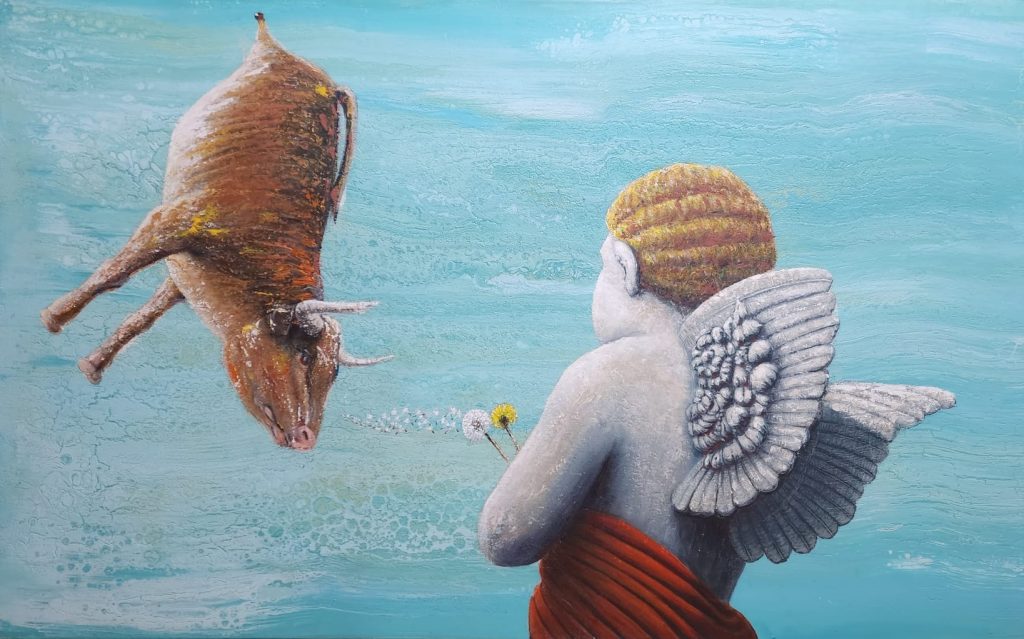
POWERLESS GUARDIAN
Our Capacity for Empathy and Engagement A Painting Exploring Empathy and Engagement This painting explores empathy in the captivating relationship between the ascending flower-eating bull and a celestial guardian, set against a heavenly blue background created using the pouring technique. The vibrant red cloak that the angel is wrapped in draws the eye with its intense warmth, contrasting the
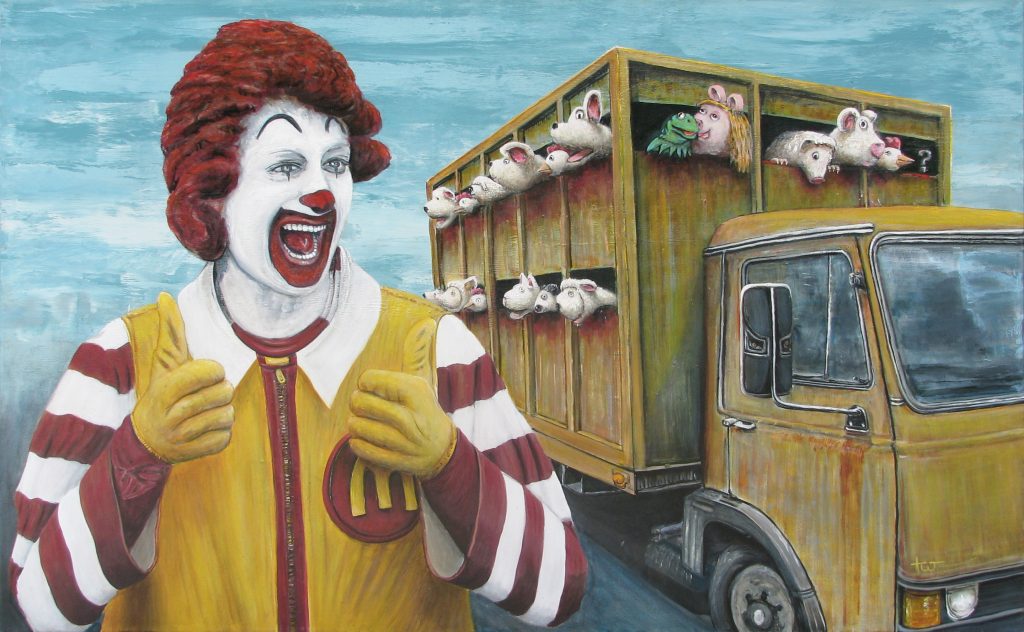
CASUAL CRUELTY
Contrasting Realities A Surreal Animal Rights Painting When Childhood Icons Meet Animal Rights This surreal animal rights painting, “Casual Cruelty,” invites you to a vivid world where childhood innocence and stark reality blur. The character resembling Ronald McDonald, the famous fast-food clown mascot, is shown with a wide-open mouth as if shouting or laughing, giving a thumbs-up with both
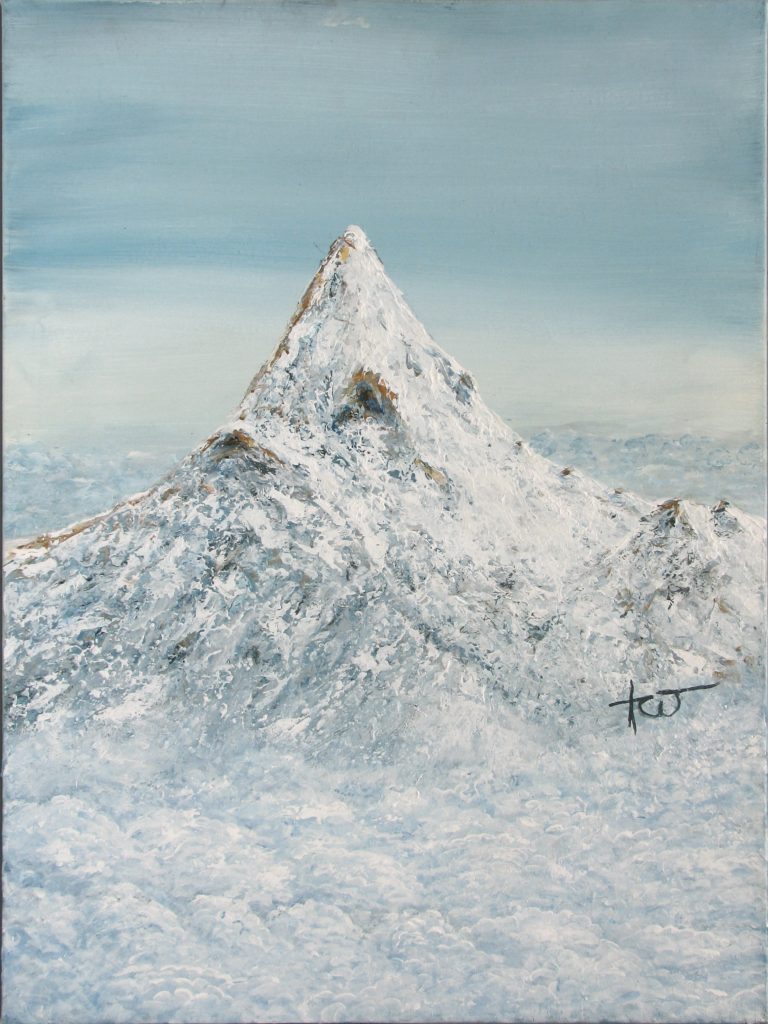
ABOVE THE CLOUDS
“Above the Clouds” is a stunning landscape painting that captures the serene majesty of a snow-capped mountain peak rising above a sea of clouds. Delicate use of color create a tranquil scene that invites viewers to imagine the crisp, clean air and peaceful solitude high above the world. This painting is a testament to the natural beauty of mountain
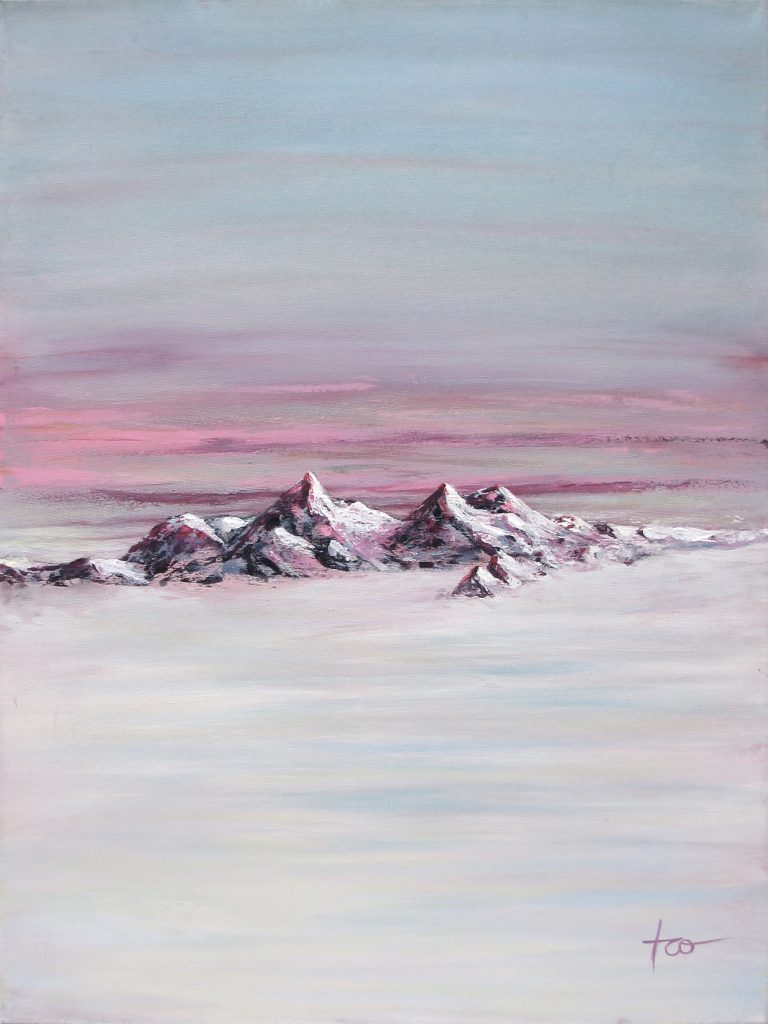
MISTY MORNING SUMMIT
This bright landscape painting captures the delicate romance between breaking dawn and majestic mountains. Bathed in a gentle pink haze, the artwork evokes a serene mood of tranquility and contemplation. The canvas unfolds like a gentle path, leading the eye from the neutral shades in the foreground up towards the distant mountain peaks. As your gaze ascends, it is
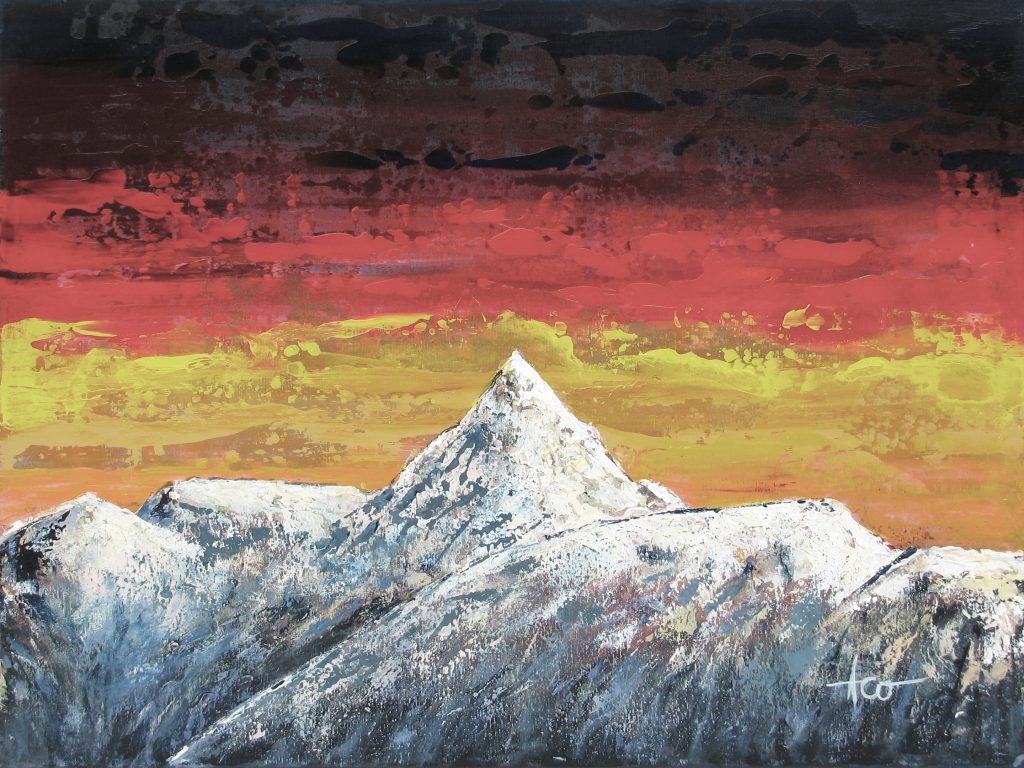
THE OPPOSITES ATTRACT
This unconventional mountain silhouette painting breaks away from traditional depiction of natural landscapes and gives a refreshing, striking vision. The sharp horizontals of the sky rest strangely against the cold, pointed peaks of mountains in this composition, representing precisely a symphony of visuals by contrast. The sky, a dramatic unfurling banner of vivid tones of golden yellow and fiery
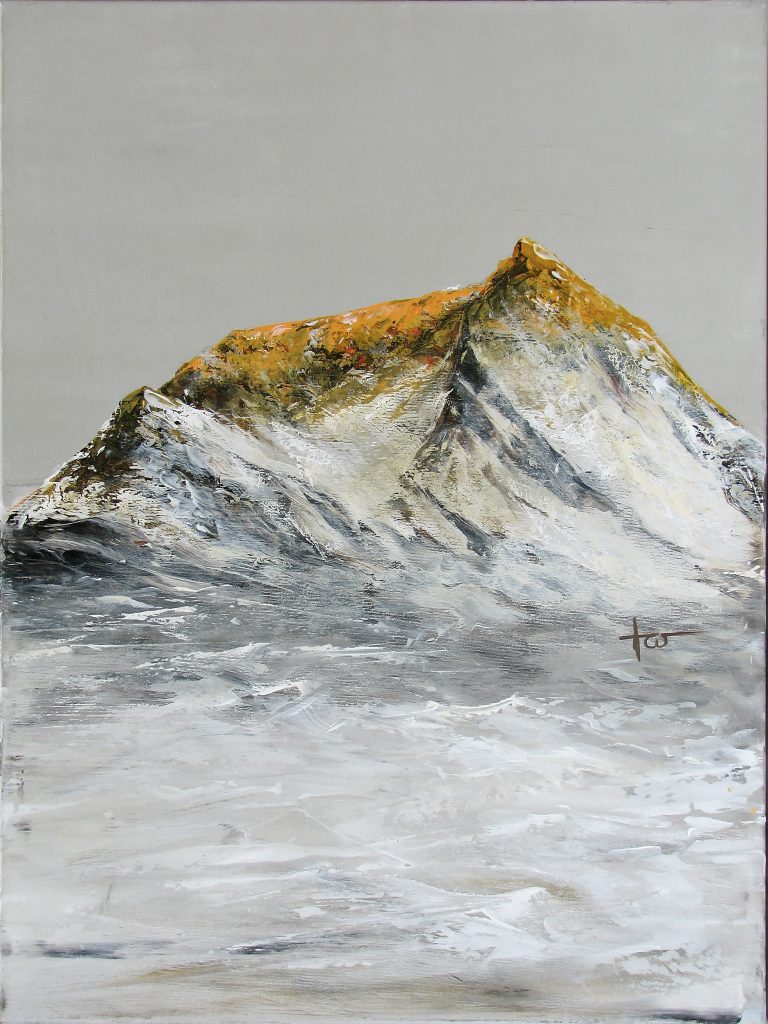
GOLDEN SUMMIT
Bright and beautiful landscape piece that captures with unrivaled finesse the moment when a ray of light descends on mountain ridges, bathed in all richness to transform them into gilded majesty! Like an autumn cascade over mountain peaks, light fractures into hundreds of golden shards, covering them with warm brilliance. The ethereal spectacle at the summit creates an impression
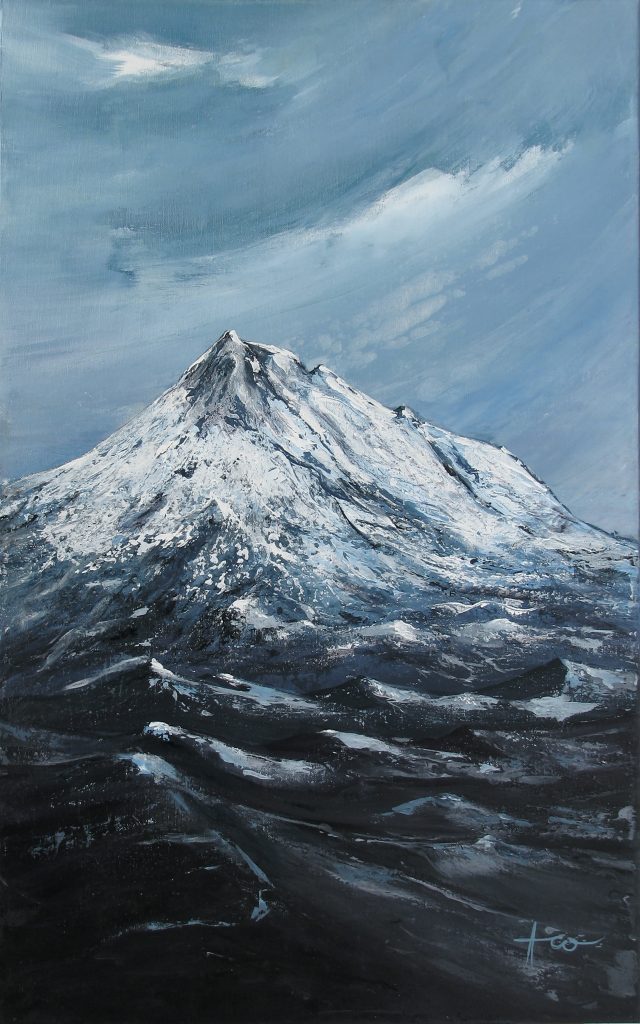
NATURE’S TEMPEST
This dynamic landscape painting oscillates from the raw fury of a storm to the chilling intensity of a snow blizzard. Diagonal strokes breathes life into the sharp, relentless winds that seem to cut across the canvas. Whether as bursting waves or shards of ice, this piece is a beautiful dedication of respect to such powerful forces of nature, so
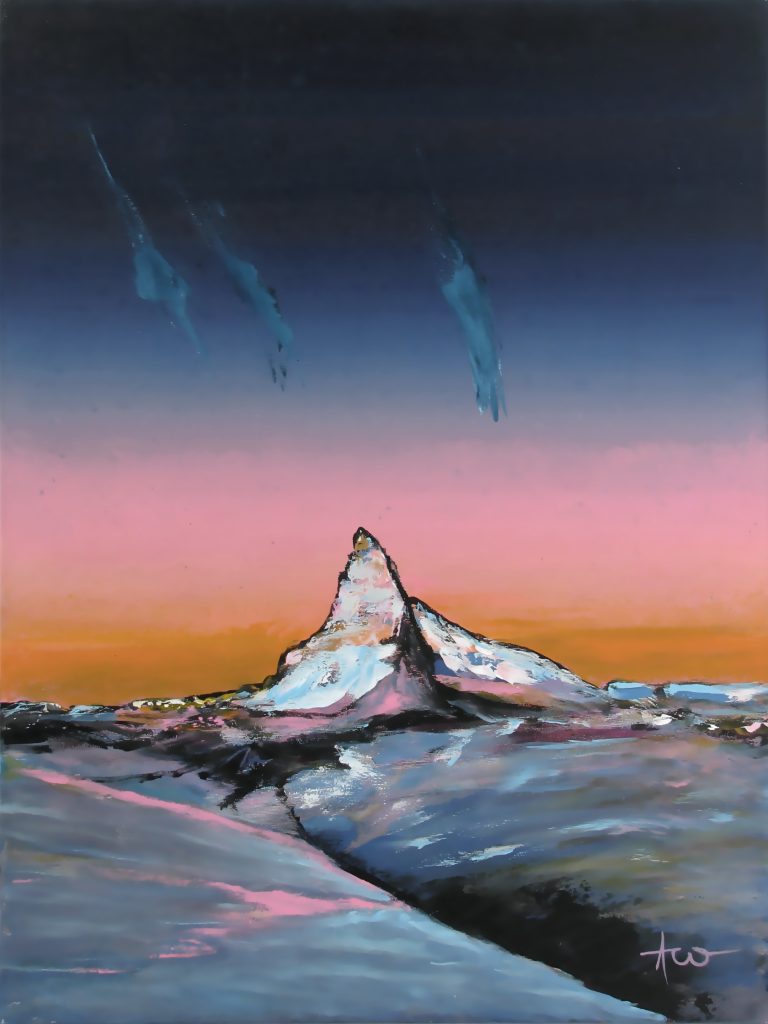
PURPLE HAZE
This is an exciting landscape painting, capturing mountain peaks under an otherworldly purple haze, plunging you into a realm of science fiction. The views from the top are transcendent, exploding into vibrant spectacles of surreal colors that rarely seen in the natural world. Unique visual phenomena arising at that juncture of terrestrial and celestial, creating an extraordinary tableau in

ETHEREAL HORIZONS
This romantic landscape painting captures the serene beauty and mystery of nature through the simplicity of horizontal lines and a restrained, neutral color palette. Minimalistic dark strokes carve out distant peaks and build a silhouetted form against such an understated backdrop. An innocently growing streak of light brings another dimension into the painting, thus leaving it open – is

CATCH ME IF YOU CAN
Balance Between the Arena and the Slaughterhouse In this captivating composition, inviting contemplation and empathy from the observer, the canvas unveils a scene rich with shadows and movements, where the narrative unfolds through the dynamic interplay of forms, their diagonal positioning, and the compelling interactions between them. Only the bravest of the bulls will live to the age when
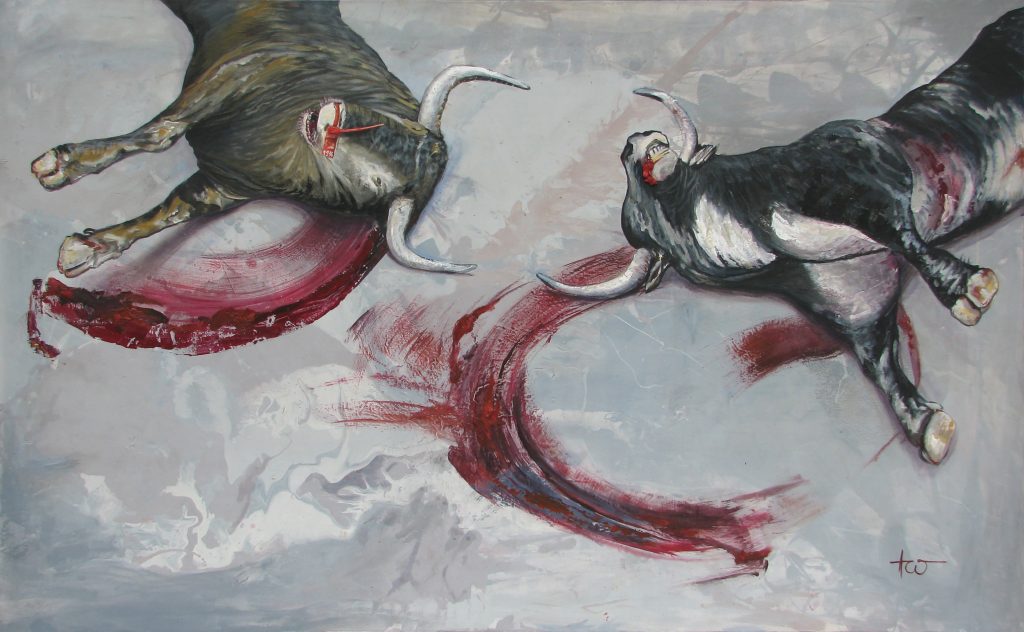
SILENCE OF THE BULLS
Chill of a Slaughterhouse Floor “Silence of the Bulls” is a haunting and evocative painting that depicts the tragic aftermath of a bullfighting mishap. Two lifeless bull carcasses are shown being solemnly dragged, leaving vivid crimson blood trails in their wake against a neutral, cold backdrop that evokes the unfeeling chill of a slaughterhouse floor. The composition powerfully contrasts

CONFRONTATION
Raw Power and Emotion of the Tienta This visceral interpretation of the traditional “tienta” ritual captivates with its raw, emotional energy. Where the previous rendering evoked elegance and drama, this version embraces a more expressionistic style, amplifying the intensity of the encounter. The painting’s composition immediately draws the viewer into the fray. The bull, rendered in a riot of

CRIMSON CONFRONTATION
The Use of Animals for Entertainment A captivating sea of red that makes the background, hints at the visceral echoes of bloodshed. Amidst this crimson expanse, three enigmatic figures command attention — a woman, a bull, and a man; each a distinct entity yet entwined by the omnipotent power of red. The woman, embodying the essence of a bullfighting

CIVILÓN AND CARMELITA
Conflict and Compassion The painting “Civilón and Carmelita” eloquently portrays the intricate relationship between the brutality of bullfighting and the tender compassion. Set against a backdrop of moonlit, yellow sand, and a serene blue sky, this artwork draws viewers into two contrasting yet interconnected scenes. In the foreground, there is intense confrontation between a matador and a bull, each

IS THIS THE END?
Fragility of Life This haunting painting captures the final, tragic moments of Civilón’s life – a beloved bull whose story has become a symbol of the fragility of existence and the capacity for both gentleness and violence that resides within the human spirit. On the second day of Spanish Civil War, against the backdrop of a fading pink sky,
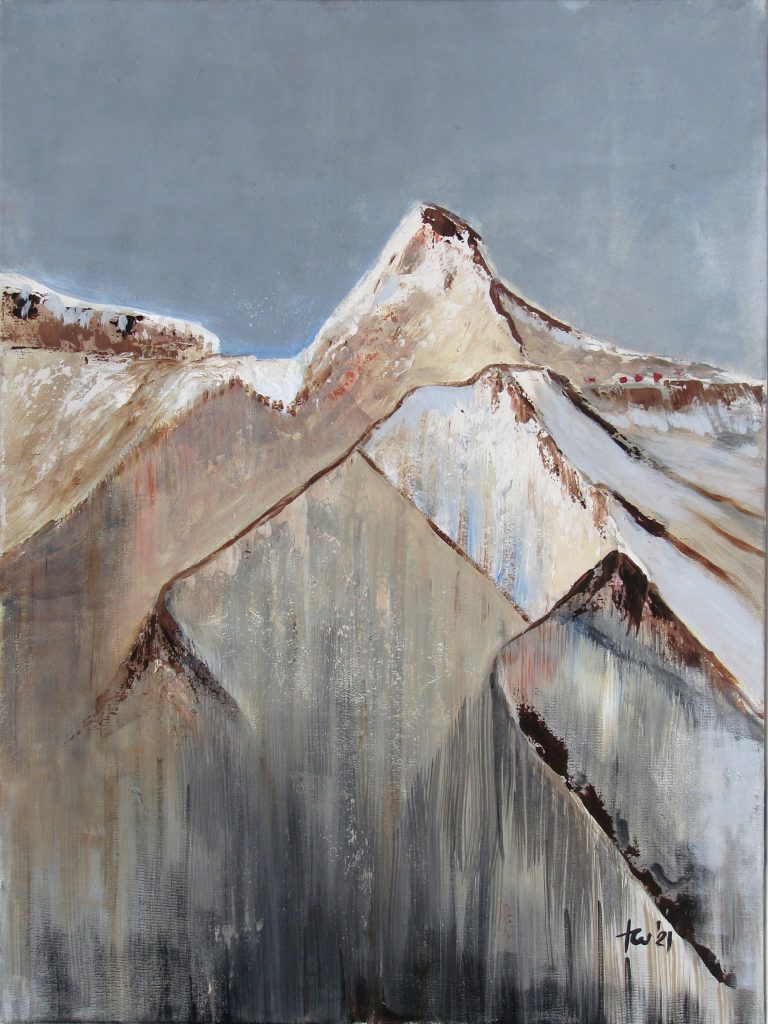
Silent Giants
Immerse yourself in the serene and majestic beauty of mountains in “Silent Giants”. Use of earthy tones and abstract textures brings to life the rugged terrains and snow-capped summits, creating an illusion of depth and movement that pulls viewer into it. Vertical lines give the canvas a sense of towering height and immersive depth attained magnificently through a minimalist

FROZEN BEAUTY
The painting captures Dolores’ excitement a mere 500 meters from the summit of Mount Everest. Against the stunning backdrop of the Himalayas, frozen in time and wrapped in ethereal beauty, she stands a breath away from achieving the unimaginable. Imagine the surge of anticipation, the culmination of two years of relentless mental and physical training, and a grueling two-month
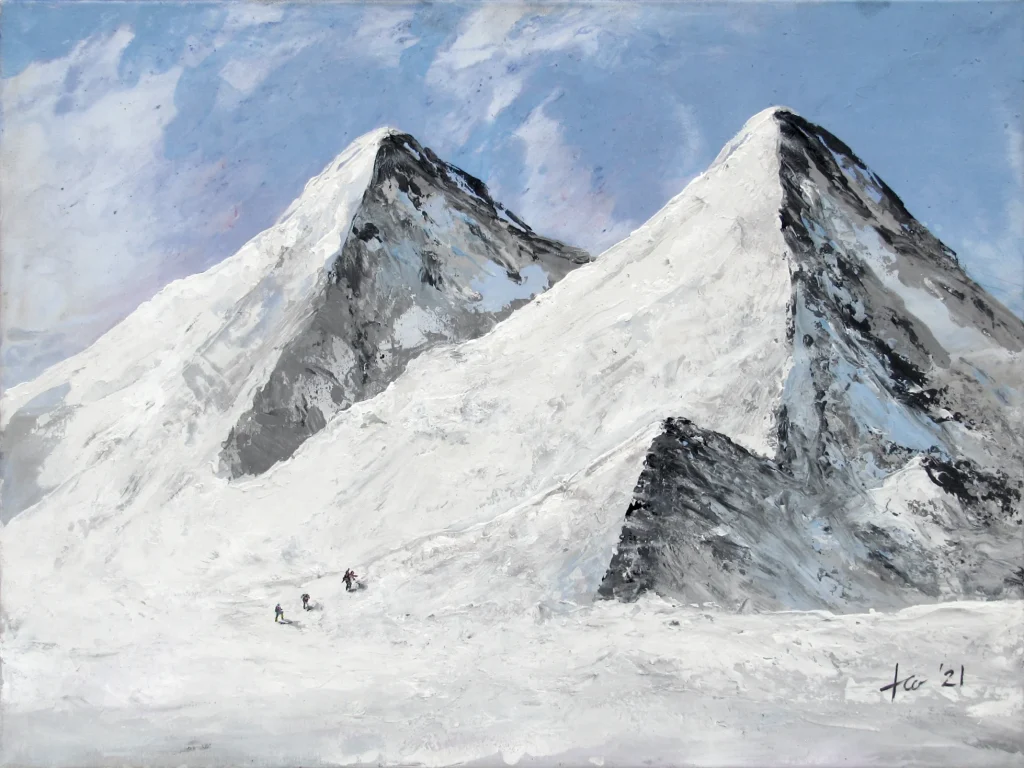
THE MAJESTIC PEAKS MOUNTAIN
This painting is a testament to the insignificance of man in the face of nature’s might. No matter how small we seem before the mountain, we never cease in our endeavors to surmount it. The allure of scaling mountains and pushing ourselves to the limit stems from our innate desire to triumph over nature’s adversity. There, at the foot

THE NEAR DEATH EXPERIENCE
THE NEAR DEATH EXPERIENCE, 80x60cm; 31.5×23.6″, Acrylic on Canvas, Aleksandar Petković, Available Soon This painting captures the near-death experience, underscoring the support from unseen hands needed to reach life’s summits. After the two-month journey, Dolores Al Scheila and her team were about to reach the summit of Mount Everest when Dolores faced a life-threatening experience due to the “high